


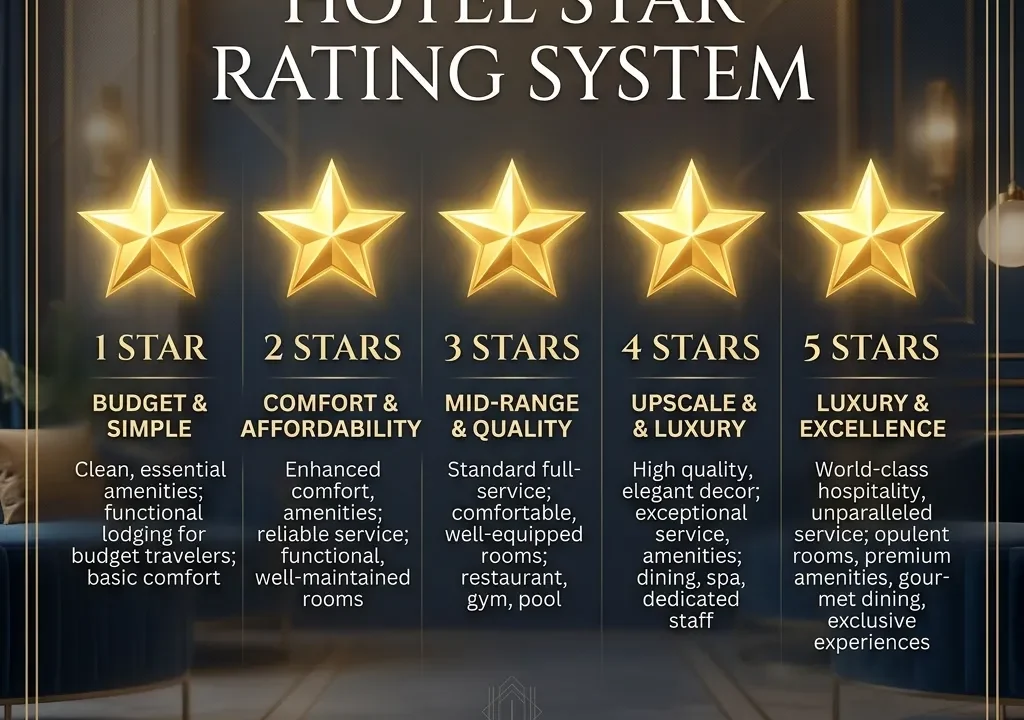
This comprehensive guide breaks down everything you need to know about global property evaluations. You will learn specific tier criteria, discover top rating agencies, and find actionable strategies that hoteliers use to consistently elevate their standard of service and property value.
The Hotel Star Rating System is an essential standard used worldwide to classify hotels based on their quality, facilities, services, and overall guest experience. In today’s competitive hospitality industry, travelers rely heavily on star ratings to choose accommodations that match their expectations and budget. From basic one-star hotels offering simple amenities to luxurious five-star resorts delivering premium comfort and personalized services, the rating system helps guests quickly evaluate accommodation standards before booking. This year, hotel ratings continue to influence travel decisions, online reviews, and tourism trends across the globe. Different countries and organizations may follow unique evaluation criteria, including room quality, cleanliness, dining options, customer service, and recreational facilities. Understanding the Hotel Star Rating System allows travelers to make informed choices while helping hotel owners maintain consistent service quality. Ultimately, it serves as a trusted guide that connects guest expectations with hospitality excellence and overall travel satisfaction.
Understanding the Hotel Star Rating System

The hotel star rating system provides an objective measure of a property’s quality, facilities, and service standards. It serves as a universal language within the hospitality industry, allowing guests to set accurate expectations before they arrive at the lobby. Whether a guest seeks functional budget accommodations or sprawling luxury resorts, the hotel star rating system guides their purchasing decisions and guarantees a baseline of quality.
A reliable hotel rating system builds trust between the property and the consumer. Hoteliers leverage the hotel rating system to benchmark their offerings against competitors and justify their specific pricing strategies. Operating without the hotel star rating system leaves both travelers and owners guessing about service baselines. The hotel star rating ensures transparency, giving property managers a clear roadmap for physical and operational improvements.
How Hotel Star Ratings Work
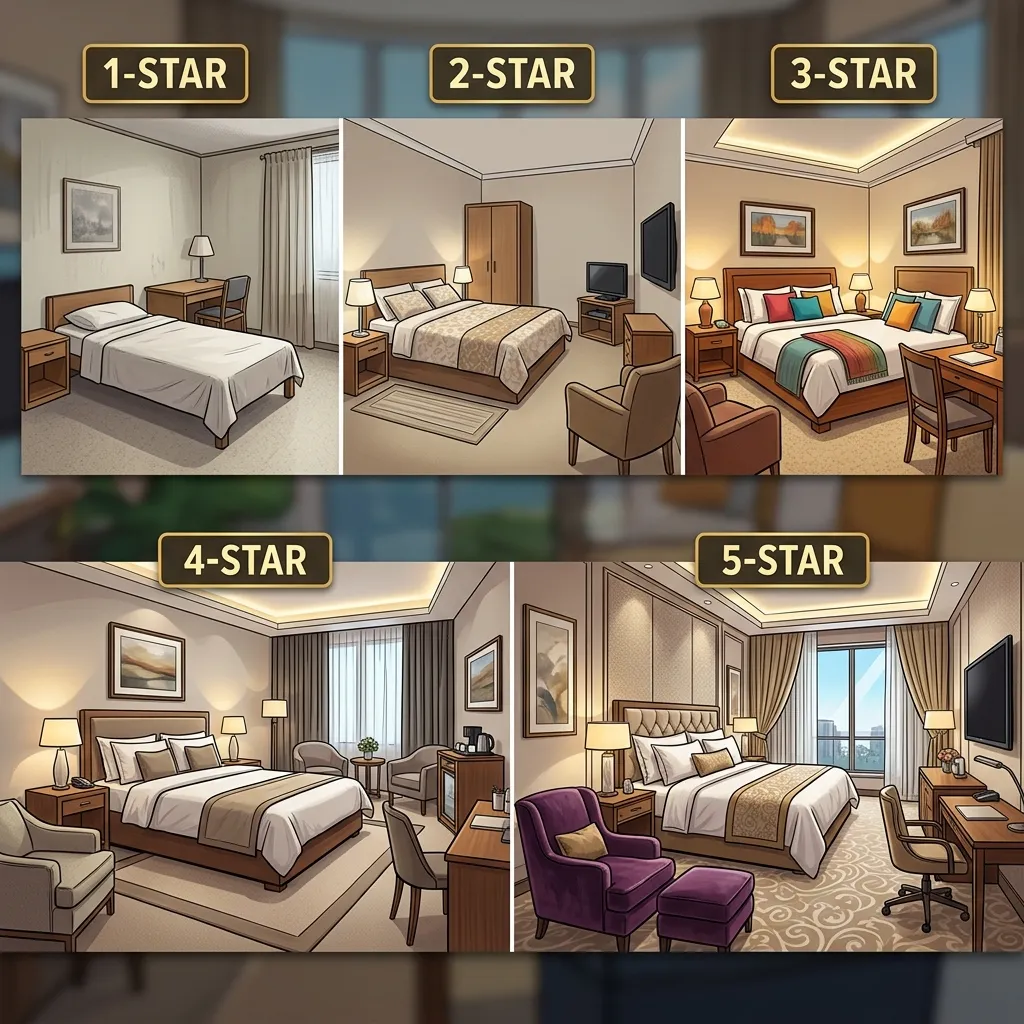
Every hotel star rating system follows a progressive scale. Global agencies assess specific benchmarks across property types. Here is how the hotel star rating generally classifies properties worldwide:
1-Star: Basic Essentials
A 1-star property offers basic room necessities. Guests find a bed, a functional bathroom, and minimal guest amenities. The hotel star rating system identifies these as purely functional spaces for transient travelers. Management focuses on safety and basic sanitation rather than luxury or extended comfort.
2-Star: Modest Comfort
A 2-star rating provides simple accommodations with limited services, often including a television, telephone, or a basic continental breakfast. The hotel star rating system considers this standard economy. You will not find highly personalized service here, but you can expect a clean, secure environment suitable for short stays.
3-Star: Quality and Convenience
A 3-star classification delivers enhanced comfort and convenience. These properties typically feature on-site dining, small fitness centers, and superior customer service. The hotel rating system views these as mid-range options. Staff members usually offer luggage assistance, and the rooms feature upgraded bedding and functional workspaces.
4-Star: Premium Experiences
A 4-star designation represents premium quality. Expect upscale room decor, multiple dining options, dedicated concierge services, and high-end bedding under this tier of the hotel rating system. Properties at this level offer valets, room service, and often boast impressive architectural details that elevate the overall aesthetic.
5-Star: Unmatched Luxury
A 5-star label signifies ultimate luxury. These properties offer highly personalized greetings, extensive wellness facilities, gourmet dining, and flawless execution of the hotel star rating criteria. Staff members anticipate guest needs before they arise, providing bespoke experiences, private transfers, and meticulous attention to every conceivable detail.
Major Global Rating Organizations
Various organizations govern the hotel star rating system worldwide. In Europe, the Hotelstars Union standardizes criteria across numerous member countries to ensure the hotel star rating system remains consistent across borders. In the United States, the AAA Diamond Program and the Forbes Travel Guide operate as the premier authorities for the hotel star rating system. Additionally, Michelin evaluates properties through its distinct key system, adding another nuanced layer to the international hotel star rating system landscape. Relying on these official bodies guarantees that a hotel meets rigorous, unbiased standards.
Comparison Table: Star Ratings vs. Diamond Ratings
To clarify how the hotel star rating system differs from other prominent metrics, we provide this comprehensive comparison:
|
Feature |
Hotel Star Rating System |
AAA Diamond Ratings |
|---|---|---|
|
Focus |
Facilities, amenities, and service levels. |
Cleanliness, physical attributes, and service quality. |
|
Evaluators |
Various global entities (Forbes, government bodies). |
AAA professional inspectors. |
|
Top Tier |
5 Stars (Luxury, personalized service). |
5 Diamonds (World-class luxury and sophistication). |
|
Scope |
International, highly varied by region. |
Primarily North America and the Caribbean. |
Key Requirements for High Ratings
Earning top marks in the hotel star rating system requires rigorous attention to physical details and human interactions. Inspectors evaluating the hotel rating system focus on several core pillars.
Room Standards
Properties must maintain impeccable cleanliness protocols. High-rated hotels provide premium linens, smart room technology, and spacious layouts to satisfy the hotel star rating system. Inspectors look closely at mattress quality, soundproofing, and the pristine condition of bathroom fixtures.
Amenities
The hotel star rating system heavily weighs property facilities. Top-tier locations feature expansive pools, luxury full-service spas, and state-of-the-art fitness centers that align with the hotel rating system standards. Business centers, high-speed internet, and unique architectural features also play a major role in scoring.
Service
Exceptional guest relations drive high scores in the hotel star rating system. Staff must anticipate needs, offer 24/7 room service, and maintain absolute professionalism to master the hotel rating system. Personalized touches, such as remembering dietary restrictions or anniversary dates, significantly boost evaluator scores.
How to Find and Verify a Hotel’s Star Rating
Travelers can easily verify a property’s standing in the hotel star rating system. You should check the official Forbes Travel Guide or local government tourism board websites. While online travel agencies display a hotel rating system, these platforms sometimes mix official ratings with user-generated review scores. Always consult official evaluating bodies to confirm an accurate hotel star rating system evaluation. Cross-referencing platforms ensures you receive exactly the level of service you pay for.
Strategies for Hoteliers to Increase Ratings

Hoteliers seeking to climb the hotel star rating system must adopt proactive, continuous improvement strategies. Implementing smart room technology directly impacts the hotel rating system score. Furthermore, properties must invest in rigorous staff training programs to ensure service consistency across every department. Gathering and acting upon guest feedback also allows management to fix operational gaps before official hotel rating system inspectors arrive. The hotel star rating system rewards proactive management that anticipates problems instead of just reacting to them.
Common Mistakes to Avoid
Navigating the hotel star rating system poses severe operational challenges. Hoteliers must actively avoid these critical pitfalls:
- Ignoring regular building maintenance, which immediately drops a hotel’s star rating system score.
- Failing to train staff on standard hospitality etiquette.
- Overpromising luxury amenities that do not meet official hotel rating system definitions.
- Displaying outdated or unofficial ratings on marketing materials.
- Neglecting the exterior curb appeal of the property.
Pro Tips and Expert Insights
Mastering the hotel rating system requires sharp strategic focus. Industry experts offer these insights regarding the hotel star rating system:
- Focus on the details: Inspectors for the hotel star rating system notice the small things, like shower water pressure and ambient lighting quality.
- Personalize the stay: Remembering a guest’s name drastically improves the perceived value within the hotel star rating system framework.
- Audit consistently: Run internal checks using the hotel rating system rubric before official evaluations happen.
- Invest in sleep quality: Premium mattresses and blackout curtains yield high returns on investment for rating criteria.
Conclusion
Mastering the hotel star rating system guarantees better visibility, higher revenue, and unmatched guest loyalty. Implementing these proven strategies ensures your property meets rigorous global standards while outpacing the competition. Audit your current amenities today and take the first step toward dominating the market. Contact our hospitality experts right now.
Frequently Asked Questions
1. What exactly is the hotel rating system?
The hotel star rating system is a standardized framework used to evaluate and classify the quality, amenities, and service levels of a hospitality property. It provides travelers with a reliable benchmark for booking.
2. Who decides the hotel rating system scores?
Independent organizations, government tourism boards, and independent travel guides like Forbes govern the hotel star rating system. They use professional, anonymous inspectors to determine scores.
3. Does a 5-star hotel always have a pool?
Usually, yes. The 5-star tier of the hotel rating system requires extensive luxury amenities, which almost always include premium pool and full-service spa facilities.
4. Why do hotel rating system standards vary by country?
Different countries use varying criteria based on cultural expectations and local tourism regulations to define their specific hotel star rating system. European standards often differ from North American standards.
5. Can a hotel lose its status in the hotel rating system?
Yes. If a property fails routine inspections or lets its physical and service standards slip, regulatory authorities will downgrade its official hotel rating system score.
6. Are user reviews part of the official hotel rating system?
No. While user reviews reflect customer satisfaction on booking sites, the official hotel rating system relies entirely on objective, professional inspections from governing bodies.
7. How does the hotel rating system impact room pricing?
Higher scores in the hotel star rating system allow properties to command premium room rates due to the guaranteed level of luxury, exclusive amenities, and personalized service.
8. What is a 7-star hotel?
Officially, the hotel star rating system caps at 5 stars. The “7-star” label represents a marketing term used by exceptionally luxurious properties to signify unmatched opulence and extravagance.
9. How long does a hotel rating system evaluation take?
Professional inspectors usually evaluate a property over a two to three-day anonymous stay to accurately and thoroughly apply the hotel star rating system criteria across all departments.
10. How can my property apply for the hotel rating system?
Hoteliers must submit a formal application to their regional governing body or an independent agency like Forbes to initiate the rigorous hotel star rating system evaluation process.


I’m Plabon, Editor at TravelLuxuryS.com. With a passion for luxury travel and unforgettable experiences, I create content that inspires travelers to explore the world in style. At Travel Luxury S, my goal is to share guides, tips, and curated recommendations that help readers plan extraordinary journeys and make every trip truly memorable.







No Comments